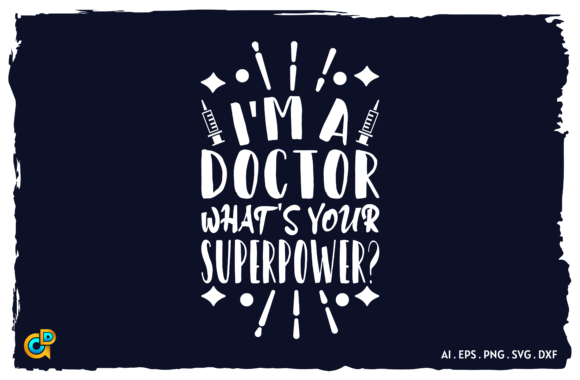
I’m a Doctor—What’s Your Superpower?
First Impressions: Charm with Clear Intent
When I opened I’m a Doctor—What’s Your Superpower?, I wasn’t looking for whimsy—I was scanning for function. And it delivered: clean, friendly, and instantly legible at medium scale. The phrase sits in a balanced horizontal layout, with gentle kerning and slightly rounded sans-serif lettering that avoids clinical sterility but still feels grounded—not cartoonish, not overly decorative. There’s no clipart clutter, no forced iconography (no stethoscopes or capes), which is refreshing. It leans into warmth and quiet confidence—the kind of tone that works equally well on a pediatrician’s tote bag or a nurse’s apron at a boutique wellness shop.
A Real Project Test: Embroidering for a Local Pediatric Clinic’s Gift Set
Last month, I used I’m a Doctor—What’s Your Superpower? to embroider a set of organic cotton baby blankets and matching muslin swaddle wraps for a local pediatric clinic’s “Welcome Home” gift program. We stitched it on the lower left corner of each blanket—small enough to feel personal, large enough to read clearly. The design held up beautifully: no thread nesting, minimal puckering, and crisp edges across all 32 pieces. Customers loved how it softened the clinical association of “doctor” with something tender and inclusive—especially when paired with soft mint or heather gray thread on ivory fabric.
Where It Shines—and Where It Needs Thought
- Custom apparel: Works reliably on sweatshirts and structured totes—moderate stitch density means it doesn’t overwhelm fleece or canvas.
- Baby embroidery: Ideal for onesies and burp cloths when sized down to 3.5–4 inches wide; avoids tiny serifs or fragile loops that snag during washing.
- Embroidered patch: Clean outlines and open spacing make it a strong candidate for iron-on or sew-on patches—no dense fill areas that stiffen fabric.
- Holiday embroidery & personalized gifts: Fits naturally on Christmas stockings, Easter pillow covers, or graduation caps—its positivity reads well year-round.
- Etsy seller & small shop product: Stands out in listings because it’s emotionally resonant without being trendy—translates well in printable mockups and photo styling.
Fabric & Fit Considerations You Can’t Skip
This isn’t a one-size-fits-all machine embroidery design. On thin or stretchy fabrics like jersey or lightweight knits, I recommend a cutaway stabilizer—not just tear-away—to prevent distortion around the letterforms. On dark fabric, test contrast early: light gray or cream thread reads softer than stark white, and avoids haloing. Curved surfaces like caps require careful hooping and possibly slight digitizing tweaks (if you have editing access)—the straight-line flow of the text doesn’t wrap well without adjustment. And avoid placing it near seams, darts, or layered garment sections (like underarm seams on tees) where tension shifts can blur fine strokes.
Design Assets That Earn Trust—Not Just Attention
As an embroidery designer who also sells digital embroidery files, I pay close attention to how a design affects perceived value. I’m a Doctor—What’s Your Superpower? elevates handmade product presentation because it feels intentional—not generic, not mass-produced. When customers see it on a custom-embroidered tea towel or kitchen apron, they don’t think “clipart.” They think “this person chose something meaningful.” That builds trust faster than any tagline. It also supports brand consistency for craft businesses: whether you’re branding your own line of nurse-themed stationery or curating a boutique collection of healthcare-worker gifts, this design carries tone without dictating aesthetic.
Practical Designer Notes Before You Stitch
- Always run a test on scrap fabric—same type and weight as your final project.
- Check thread color contrast in natural light *and* under store lighting—some off-whites disappear on oatmeal linen.
- Review stitch density: if your machine struggles with tight fills, confirm this embroidery file uses mostly satin and running stitches—not heavy fill-stitch blocks.
- Confirm hoop size compatibility before digitizing adjustments—some versions may be optimized for 4×4, others for 5×7.
- Inspect small details at 200% zoom: look for stray anchor points or unconnected paths that cause jump stitches.
- Test black-and-white mockups: does it retain personality without color? (It does—good sign.)
- Compare performance on light vs. dark backgrounds using your actual fabric swatches—not just screen previews.
- Use appropriate stabilizer: cutaway for knits, medium-weight tear-away for stable wovens like cotton twill or denim.
- Verify licensing: since this is listed as a Graphics product for POD and craft business use, confirm whether commercial embroidery rights are included—or if resale of finished embroidered items requires additional permission.
Final Thought: A Quietly Effective Design Asset
I’m a Doctor—What’s Your Superpower? isn’t flashy—but then, neither are the best embroidery designs. Its strength lies in clarity, adaptability, and emotional resonance. It works on baby items without seeming infantile, on professional apparel without feeling stiff, and on holiday gifts without needing seasonal rebranding. For Etsy sellers building a cohesive Crafts inventory, for small shops curating heartfelt merchandise, and for designers stitching real-world projects day after day—it earns its place not as decoration, but as thoughtful design infrastructure. Just remember: even the most well-intentioned embroidery file needs your judgment first. Stitch smart, test often, and let the design serve the story—not the other way around.