Happy New Year Sticker Design: Graphics for Local Crafts & Branding
As a brand designer who’s helped over 70 local businesses—from artisanal candle studios in Portland to family-run bakeries in Austin—build cohesive, shelf-ready identities, I recently evaluated the Happy New Year Sticker Design collection for a real-world use case: rebranding a small-batch skincare brand launching its first seasonal gift set. What stood out wasn’t just festive charm—it was how thoughtfully this graphic design asset bridges celebration and credibility.
A First Impression That Feels Handmade, Not Generic
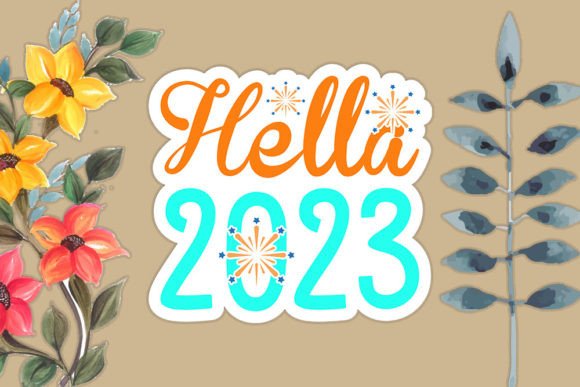
The Happy New Year Sticker Design suite delivers warmth without cliché. Think subtle gold foil textures layered over soft watercolor strokes—not glitter bombs or cartoon fireworks. It reads as handmade business, not mass-produced clipart. For a local soap maker using recycled kraft labels and soy-based inks, that tone is gold: it signals care, craftsmanship, and quiet confidence. The mood leans celebratory yet grounded—festive enough for holiday gifting, refined enough for year-round boutique visuals. It avoids looking “too cute” for a men’s grooming line or “too stiff” for a children’s toy shop. That versatility makes it unusually effective across food businesses, home decor shops, and handmade sellers alike.
Where This Graphic Design Asset Earns Its Keep
In practice, the Happy New Year Sticker Design works hardest where small businesses need immediate polish:
- Product labels & packaging accents: Applied as a die-cut sticker on a matte-finish candle jar or as a foil-stamped corner element on a soap box, it adds tactile distinction without overwhelming the product label.
- Seasonal campaign visuals: Used in social media graphics, email headers, and printable inserts, it creates instant visual hierarchy—guiding the eye to “Limited Edition” or “New Year Glow Kit” before the copy even registers.
- Thank-you cards & hang tags: Paired with a simple serif font and cream stock, it transforms a basic thank-you into a branded moment of warmth—critical for repeat customers in local retail.
- Menu graphics & price lists: A scaled-down version anchors café specials or holiday bundles on chalkboard-style menus, reinforcing seasonal messaging without clutter.
- Product mockups: When placed on digital mockups (e.g., a ceramic mug or linen tote), the SVG and high-res PNG files render cleanly at any size—no pixelation, no jagged edges. That realism builds client trust before physical production begins.
Real Impact on Business Presentation
This isn’t just decoration—it’s strategic visual infrastructure. Using the Happy New Year Sticker Design consistently across packaging, social posts, and in-store signage strengthens brand identity by creating repetition without redundancy. Customers begin recognizing your holiday palette before they read your name. Shelf appeal improves because the design adds rhythm and contrast to otherwise minimalist packaging. Emotional connection deepens when the illustration feels personal—not algorithmically generated, but intentionally chosen. And crucially, it elevates perceived professionalism: a locally made hot sauce brand using these stickers on its limited-edition “Resolution Reserve” jars instantly reads as curated, not rushed.
Smart Usage Boundaries
Like any strong design asset, the Happy New Year Sticker Design has context limits. Avoid placing it directly over ingredient lists, legal disclaimers, or QR codes—it competes with critical information. On very small labels (under 1.5 inches wide), test legibility: some sublimation-friendly variants lose delicate linework when scaled down. It doesn’t suit luxury minimalist brands aiming for stark monochrome—its warmth and texture require breathing room. And if your brand voice is strictly corporate (e.g., a local accounting firm’s holiday card), this graphic design asset may feel tonally misaligned. Always ask: does this support the message—or distract from it?
Practical Designer Notes You Can’t Skip
Before deploying the Happy New Year Sticker Design in live branding work, here’s what I test every time:
- Preview it on actual product mockup files—not just thumbnails—to assess scale, bleed, and color harmony with your brand palette.
- Convert to grayscale: does the contrast hold up for black-and-white printing (e.g., bakery napkins or receipt tape)?
- Check transparency: the PNG files must have clean alpha channels—no stray white halos around delicate elements.
- Verify vector editability: the SVG files should allow easy recoloring for brand consistency (e.g., swapping gold for sage green).
- Test typography pairings: try it beside serif (Playfair), sans serif (Inter), script (Pacifico), and handwritten fonts—does it anchor or overwhelm?
- Confirm commercial license terms: this is non-negotiable for client work, physical product sales, or resale packaging. Never assume marketplace licenses cover all use cases.
- Compare against competitor packaging: does it stand out on shelf or blend in? Festive shouldn’t mean forgettable.
Why Local Businesses Choose This Over Generic Clipart
Unlike generic holiday clipart flooding creative marketplaces, the Happy New Year Sticker Design collection feels intentional—not templated. Its balance of decorative detail and negative space gives small business branding room to breathe. Whether you’re designing for a florist’s “First Bloom” New Year bouquet wrap or a coffee roaster’s limited “Resolution Roast” bag, it serves as a unifying visual thread—not a one-off flourish. As a digital product, it’s efficient; as a graphic design asset, it’s adaptable; and as part of your small business branding toolkit, it quietly signals that you value both celebration and craft.
Final Thought: Design That Sells While It Celebrates
Great local business branding doesn’t shout—it resonates. The Happy New Year Sticker Design earns its place not because it says “Happy New Year,” but because it helps your business say, “We made this *for you*.” That’s the difference between seasonal decoration and strategic marketing visuals. Use it well—and your customers won’t just remember the date. They’ll remember your brand.