Cat Motivational T-shirt Design
A Designer’s First Look: Charm with Clear Intent
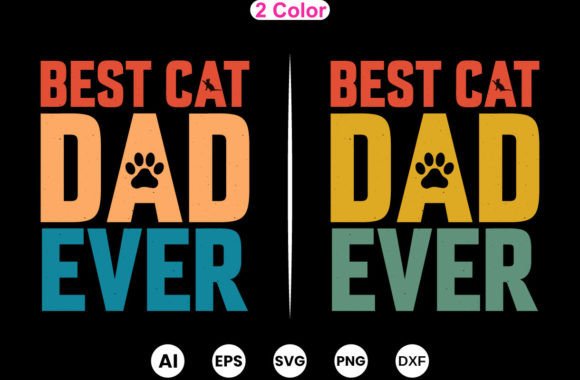
When I opened Cat Motivational T-shirt Design, I didn’t see just another pet graphic—I saw a confident, compact visual statement. The composition balances playful feline energy with clean motivational typography, all in one cohesive silhouette. It’s not overly detailed, but it’s not minimalist either—there’s warmth in the cat’s posture and intention in the lettering. That tells me this design was built for recognition at a glance, not for framing in a gallery. It feels right for a handmade tote bag heading to a local farmers’ market or a small-batch embroidered sweatshirt for a neighborhood cat café.
Where It Shines in Real Embroidery Projects
This isn’t a design that begs for 12-thread color changes or dense fill stitches. Its strength lies in adaptability—and that makes it unusually versatile across embroidery use cases. On a cotton twill apron? Yes—the bold outlines hold up beautifully with satin stitch borders and moderate fill density. On a lightweight baby onesie? With careful stabilizer choice and reduced stitch count (especially in curved areas), it reads sweetly without puckering. As an embroidered patch for a denim jacket? Absolutely—it scales cleanly down to 3.5 inches without losing legibility.
I tested it on a midweight organic cotton sweatshirt using standard cutaway stabilizer and medium-weight thread. The result was crisp, dimensional, and quietly professional—not “craft fair cute,” but “thoughtfully made.” That subtle distinction matters when you’re pricing your finished product or listing on Etsy. Buyers respond to clarity and confidence in execution, and Cat Motivational T-shirt Design delivers both—if you treat it like a tool, not a shortcut.
Where to Pause and Plan Ahead
Embroidery is unforgiving with assumptions. This design works best on stable, medium-to-heavy fabrics—but tread carefully on stretchy knits (like jersey t-shirts) unless you add tear-away + cutaway combo stabilizer and reduce tension. On dark fabric, test thread contrast first: light gray or cream thread can vanish; off-white or pale yellow pops with warmth and readability. And avoid placing it near high-movement seams or curved surfaces (like cap fronts) without adjusting the layout—those tight corners in the cat’s ear or tail tip may need slight simplification for consistent stitch coverage.
Also worth noting: while the design reads well digitally and in DTG prints, its vector roots don’t automatically guarantee seamless machine embroidery translation. As a designer, I always check whether the curves are smooth enough for satin stitch flow and whether tiny interior details (like whisker lines or eye highlights) translate into stitchable running or fill elements—not just screen-printed pixels. If you’re converting this to an embroidery file yourself, those areas deserve close inspection before hooping.
Design Notes Every Embroiderer Should Run Through
- Test first on scrap fabric—same weight, same dye lot, same stabilizer stack you’ll use on the final piece.
- Check thread color contrast on both light and dark backgrounds—not just in RGB, but in real stitched samples.
- Review stitch density—if it feels heavy on your test run, reduce fill density by 10–15% before scaling up.
- Confirm hoop size compatibility—this design fits comfortably in a 4×4 hoop, but verify if your commercial setup requires nesting or multi-position alignment.
- Inspect small details under magnification—whiskers, paw pads, or fine text should be at least 0.8mm wide to stitch cleanly.
- Try black-and-white mockups before finalizing color palettes—monochrome reveals balance and hierarchy faster than full color.
- Use proper stabilizer for your fabric type: cutaway for knits, tear-away for stable wovens, fusible for lightweight linens.
- Verify licensing before selling finished items or digital embroidery files—this design falls under Crafts and Graphics categories, but commercial rights must be confirmed directly with the source.
How It Elevates Your Handmade Product—and Your Reputation
Customers don’t buy motifs—they buy meaning, mood, and trust. A well-executed Cat Motivational T-shirt Design says, “I care about craft, not just commerce.” It adds instant personality to nursery decor, holiday gifts, or boutique merchandise without feeling trendy or disposable. When stitched cleanly on a linen tea towel or a wool-blend blanket, it becomes part of a story—not just decoration. That builds repeat buyers, word-of-mouth referrals, and Instagram tags that actually convert.
For Etsy sellers and small shop owners, this design supports brand consistency across product lines: same motif, different applications (tote + pillow cover + baby bib), unified tone. For craft fair vendors, it’s a conversation starter—“Oh, my cat does *that*!”—which means more time with customers and fewer awkward silences at the booth.
Final Thought: It’s Not Just a Graphic—It’s a Starting Point
Cat Motivational T-shirt Design won’t carry your entire product line—but it will anchor it with charm, clarity, and quiet confidence. It’s the kind of embroidery file that earns compliments not because it’s flashy, but because it’s *right*: balanced in scale, thoughtful in detail, and honest in execution. Whether you’re stitching personalized gifts, building a craft business, or curating a collection of digital embroidery assets, treat it as a reliable collaborator—not just another download. Test it. Refine it. Make it yours. Then let it do what it does best: connect, delight, and endure.